Request a demo to see how you can assess your coffee portfolio consistently, from farm to cup.
ECF shadow PEFCR-aligned footprints for coffee
Generate consistent, traceable environmental footprints for green coffee, coffee products, and prepared beverages, without building complex LCA models from scratch.

Why environmental footprint data matters in coffee now
Coffee brands are under growing pressure to show transparent, comparable environmental impact data across the value chain. Across the industry:
- The European Coffee Federation (ECF) has developed a shadow Product Environmental Footprint Category Rules (PEFCR) for coffee. It extends the generic Environmental Footprint (EF) method to green coffee, roasted and soluble coffee products, and prepared beverages.
- Retailers, regulators, and consumers increasingly expect consistent results across farm-gate, factory-gate, and cradle-to-grave assessments.
- Coffee is prepared in many ways, from filter and espresso to moka and instant, and each method needs to be assessed on a common basis.
This reflects a broader shift toward accountability across the coffee value chain. Without a standardized, scalable approach, building comparable LCAs for green coffee, manufactured products, and prepared beverages becomes slow and inconsistent.
Getting this right means building a foundation of consistent, credible data, while staying clear on what the shadow PEFCR does and doesn’t allow you to claim.
What the compliance pack delivers
Instead of building models from scratch, you get:
- An LCA model aligned with the ECF shadow PEFCR for coffee, covering three scopes: cradle to farm gate, cradle to factory gate, and cradle to grave
- Predefined system boundaries across eight life cycle stages, from cultivation through end of life
- Predefined allocation rules, field emission models, and default values for data gaps where the shadow PEFCR allows them
- The Circular Footprint Formula (CFF) applied to consumer packaging and spent coffee grounds at end of life
- Predefined datasets connected to secondary data from the latest ecoinvent version
- A flexible SimaPro model that users can adapt to their own products
- Documentation explaining the model structure, mandatory primary data requirements, and how to use it
You provide your cultivation, processing, manufacturing, and preparation data. The model applies a consistent structure, helping ensure results are aligned, comparable, and traceable.
What you can achieve with the compliance pack
- Cover your full coffee portfolio
Model green coffee, roasted and ground, soluble, and single-serve coffee, along with common brewing methods, in one consistent framework. - Avoid rebuilding complex LCA models
Skip months of interpreting the shadow PEFCR and setting up models manually. - Compare products on a like-for-like basis
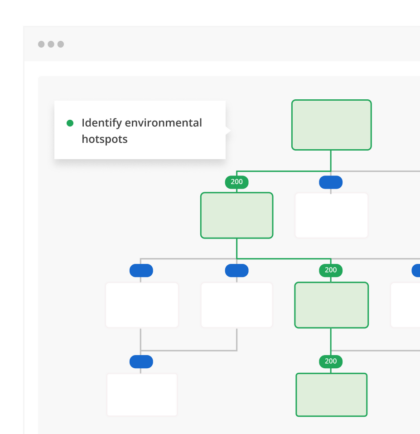
Apply the shadow PEFCR’s predefined rules for comparing functionally identical products. - Identify impact hotspots
See how cultivation, processing, manufacturing, packaging, and beverage preparation contribute to your coffee’s footprint.

Why use this compliance pack
- Skip the “blank canvas” problem
No need to interpret the ECF shadow PEFCR or build aligned models from scratch. - Ensure consistency across products and teams
One standardized model, functional unit, and allocation approach avoids variation and rework. - Be ready for internal and external scrutiny
Transparent assumptions, documented defaults, and clear guidance on mandatory primary data. - Built on a sector-specific method
Developed by the ECF and aligned with the generic Product Environmental Footprint (PEF) method and FoodDrinkEurope’s guidance for food and drink products.
How it works
- Start with the ECF shadow PEFCR-aligned model
- Configure the provided model to match your farm, processing, manufacturing, and beverage preparation data, supplying mandatory primary data where required
- Generate results aligned with the shadow PEFCR, ready for internal reporting and single product claims
Note: The ECF shadow PEFCR is not an official PEFCR. It has not been reviewed by the European Commission’s Technical Advisory Board or through public consultation. Results from this compliance pack are aligned with the shadow PEFCR and should not be communicated as PEF- or PEFCR-compliant, or used as the basis for an ecolabel.
Build credible coffee footprints with confidence