Agri-footprint database
Agri-footprint is an LCI database for agricultural products: feed, food, and biomass. The latest version, Agri-footprint 8, doubles the size of the previous and extends coverage into fresh produce with more than 2,600 fresh fruit and vegetable datasets.
Inventory coverage includes water use, land use, land use change, fertilizer application, and pesticide use.
Agri-footprint 8 will be available in SimaPro from the end of October, 2026. Agri-footprint 7 remains available in the meantime.’
This database can be purchased as an add-on to the SimaPro plans.
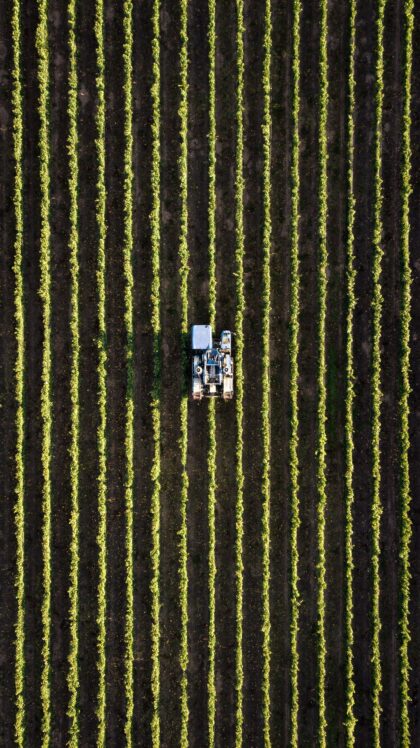
An agriculture-oriented LCI database
Demand for agricultural LCAs is rising: methodologies are reaching maturity, reporting frameworks now ask for agricultural and land-based emissions in detail (SBTi FLAG, PEF methods for food, Scope 3 disclosure under CSRD), and bio-based production of chemicals and energy is expanding.
With Agri-footprint 8, you gain access to agriculture-specific impact categories like global warming (incl. LUC and excl. LUC) and other Environmental Footprint (EF) indicators.Three allocation options are available: mass, energy, and economic allocation. SimaPro users can purchase all allocation options of the Agri-footprint database directly from SimaPro or a SimaPro partner near you, so you can smoothly install and use it directly in your account.
Agri-footprint is developed by Mérieux NutriSciences | Blonk, a leading expert in footprinting and Life Cycle Assessments (LCA) in the agri-food sector. Periodic database updates include new products, new methodologies, and updated cultivation and processing LCIs.
Watch Agri-footprint 8 webinar
Deep dive with Mérieux NutriSciences | Blonk and SimaPro on version 8.

What is new in Agri-footprint 8
Agri-footprint 8 is the largest update since the database launched. Coverage and geographic resolution doubles, and fresh fruits and vegetables arrive as a full pillar of the database.
| What changes | Agri-footprint 7 | Agri-footprint 8 | Who benefits from the upgrade |
|---|---|---|---|
| Fresh fruits and vegetables | Limited coverage; food cultivation was not covered in version 7 | Over 2,600 datasets across 49 new product categories, with cultivation systems and growing environments modeled explicitly, including an “at orchard” stage for permanent fruit and nut crops | Consultants and food and beverage R&D teams modeling multi-ingredient products, where fresh produce previously had to be approximated |
| Geographic coverage | 77 regions: 64 countries and 13 regions | 186 unique regions: 141 countries, 26 U.S. and 6 Australian states, and 13 regions | Anyone comparing sourcing origins or reporting on region-specific supply chains rather than global averages |
| Database scope | 4,830 datasets | Over 10,000 datasets, including 344 entirely new product categories | Every user. Fewer gaps means fewer compromises in your inventory |
| Background library alignment | Aligned to ecoinvent 3.10 | Aligned to ecoinvent 3.12 | SimaPro users who run Agri-footprint alongside ecoinvent, where library versions must match for consistent results |
| Production mixes | Not available | Over 200 pre-calculated, statistically weighted production mixes for Europe (RER) and Global (GLO) | PEF practitioners. PEFCR Feed requires volume-weighted mixes for ingredients of unknown origin |
| Statistical baseline | A 2018–2022 rolling five-year average, not consistently applied across all sub-models | A unified 2019–2023 rolling five-year average across crop yields, manure, pesticides, NPK splits, trade data, and land use change | Teams whose results face audit, assurance, or third-party review |
| Livestock modeling | IPCC 2006 emission modeling | IPCC 2019 emission modeling | Livestock, dairy, and feed specialists aligning to current IPCC guidance |
| European beef systems | 1 dataset only (Irish beef) | 26 new datasets covering 10 distinct systems, including suckler operations in Belgium, extensive systems in France, and intensive fattening in Italy and Germany, split by herd role | Consultants and manufacturers working on European meat and dairy supply chains |
| Independent review | No external review | Completed independent ISO 14040/44 critical review led by Dr. Tomas Nemecek at Agroscope | Anyone demonstrating the provenance and quality of their background data |
Updated methodology
Mérieux NutriSciences | Blonk has also updated the underlying models. In practice, results now reflect regional cultivation practice rather than global averages. Land occupation now uses a Fallow Land Index and Cropping Frequency approach based on spatial data, fertilizer application is crop-specific and spatially weighted, and the models for peat emissions, blue water, rice methane and indirect nitrous oxide have all been updated. Livestock systems have been re-architected and are compatible with IPCC 2019.
If you have models built on Agri-footprint 7, these changes mean your results will shift, with land-related and livestock categories the most affected. Extended info on the database updates can be found in Agri-footprint dedicated web.
Agri-footprint 8 is undergoing an independent critical review in accordance with ISO 14040 and ISO 14044, led by Dr. Tomas Nemecek at Agroscope.
Working with Agri-footprint
Agri-footprint supports agricultural LCAs and provides inventory data on bio-based production methods for the chemical and energy industries.
With the expansion into fresh produce, it also supports product-level footprints for food and beverage manufacturers, retailers, and foodservice operators. The database supports LCAs conducted in accordance with ISO 14040 and ISO 14044, and the predefined allocation options make it especially suited to sensitivity analyses.
It also strengthens product carbon footprints and Scope 3 inventories under the GHG Protocol, particularly for purchased agricultural goods where spend-based factors fall short. The split between global warming including and excluding land use change provides a land-based emissions breakdown.
Why Agri-footprint?
- The database is 100% focused on agricultural and food products.
- The database is updated regularly, based on newly available data from databases, scientific publications, and industry.
- Land use change is fully integrated based on the LUC Impact tool.
- Version 8 has completed an independent critical review against ISO 14040 and ISO 14044.
- Background data is aligned with ecoinvent 3.12, which keeps results consistent in projects that combine Agri-footprint with ecoinvent.
Database content
Agri-footprint contains more than 10,000 products and processes specific to agricultural LCA: crops, products and intermediate products, feed compounds, food products, animal production systems, and background processes such as transport, auxiliary inputs for processing, energy, pesticides and fertilizers.
Version 8 covers 186 unique regions, including 141 countries, 26 U.S. states and 6 Australian states, and adds more than 2,600 fresh fruit and vegetable datasets across 49 new product categories. Over 200 pre-calculated production mixes are available for Europe (RER) and Global (GLO).
The ecoinvent database has been used as a background database for the energy and fuel background datasets. Agri-footprint website provides a list of products included in the database, as well as an overview of known issues and bugs.
About Mérieux NutriSciences | Blonk
Mérieux NutriSciences | Blonk is a leading expert in footprinting and Life Cycle Assessments (LCA) in the agri-food sector. We empower organizations to shape a sustainable future through strategic advice, tailored software, and environmental data solutions, including Agri-footprint, our globally recognized life cycle inventory database. More information www.blonksustainability.nl