Want a ready-to-use worksheet to apply these steps? 👉 Download the Life cycle thinking starter kit – a simple tool to map your product’s journey, identify potential hotspots, and plan measurable improvements.
Making sustainability measurable: a guide for business leaders

Sustainability goals are everywhere, but turning them into action is another story. This guide shows how business leaders can begin measuring real impact using life cycle thinking. You don’t need to be an LCA expert to begin, but you do need the right line of thinking and methods. Learn how to build a strong foundation and move from ambition to data-driven decisions.
Why measurable sustainability matters
Sustainability strategies often start with good intentions, but without data, they stall. In today’s business landscape, sustainability is no longer optional. Customers, investors, and regulators are demanding transparency, accountability, and environmental performance. For example, PwC’s 2024 Voice of the Consumer Survey found that 80% of consumers are willing to pay more for sustainably produced goods. Meanwhile, the EU’s Corporate Sustainability Reporting Directive (CSRD) requires detailed ESG disclosures across thousands of companies.
Yet for many businesses, especially those without a sustainability department or life cycle assessment (LCA) expertise, it can be difficult to know where to start.
So how do you move beyond good intentions and make sustainability measurable?
The key is moving from aspirational statements to credible, data-backed improvements. This enables businesses to identify impact hotspots, set goals, and track progress using actual data, supported by tools and methodologies that scale.
At PRé Sustainability, we believe that understanding and improving sustainability doesn’t have to be overwhelming. You just need the right approach, and the right tools to take meaningful steps forward.
Making sense of the methods: life cycle thinking vs. other approaches
There are several popular approaches for measuring and managing sustainability. Here’s how life cycle thinking compares:
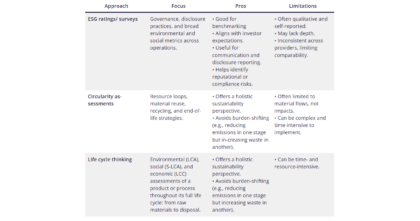
Life cycle thinking goes beyond reporting. It reveals where impacts truly occur, helping teams focus on system-level improvements. This article focuses primarily on the environmental aspect of life cycle thinking, but keep in mind: the same systems thinking approach applies equally to social and economic dimensions.
What is life cycle thinking?
Life cycle thinking (LCT) is a practical way to evaluate environmental performance by looking at every stage of a product or service:
- Raw material extraction
- Manufacturing
- Transport and distribution
- Use phase
- End-of-life (disposal, recycling, etc.)
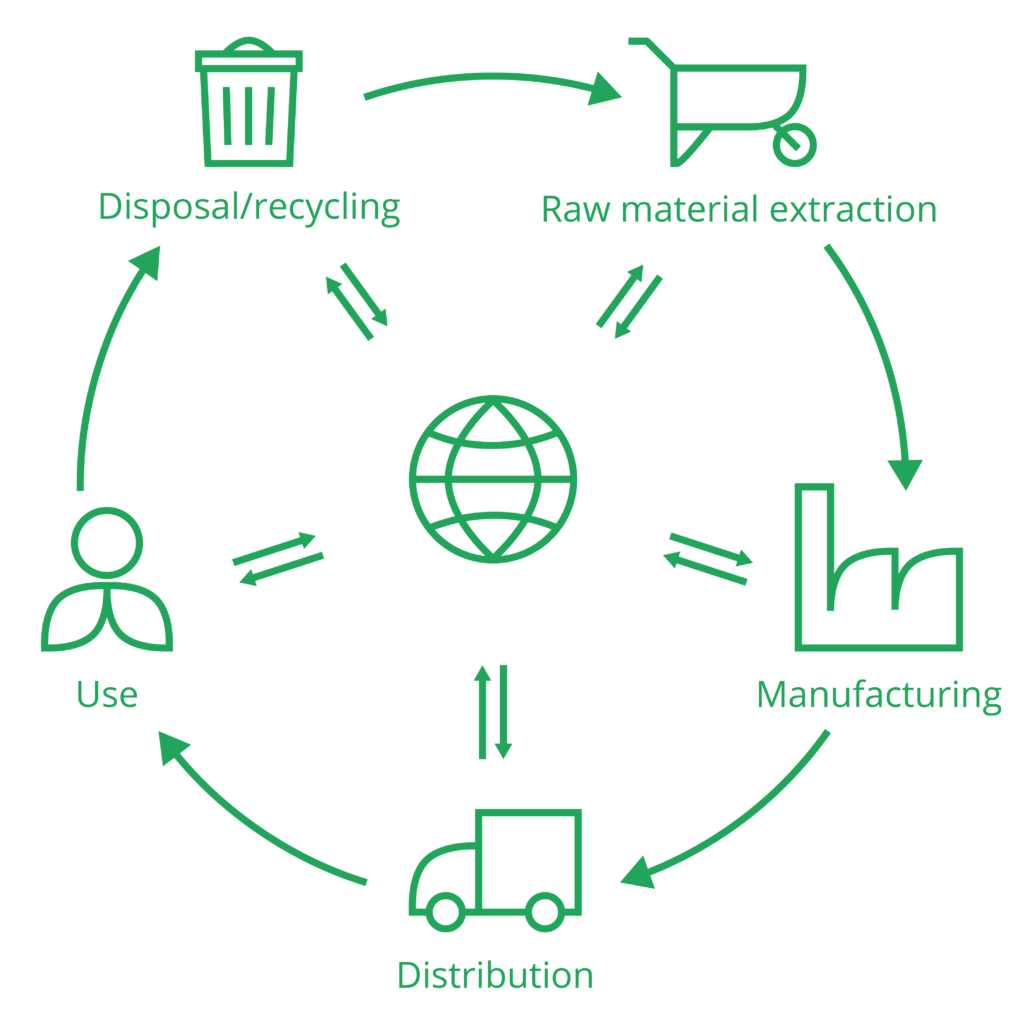
By mapping the entire product journey, LCT helps uncover hidden environmental impacts and prevent burden-shifting from one stage to another. For example, reducing the thickness of packaging may lower the environmental impact of raw material use, but it could also increase the risk of product damage during transport or storage, leading to greater losses later in the product’s life cycle.
A holistic approach helps you identify where your biggest environmental impacts are and evaluate trade-offs between them. For example, switching to bio-based materials might reduce fossil emissions but increase land use.
In each life cycle stage there is the potential to reduce resource consumption and improve the performance of products.
UN Life Cycle Initiative
LCT is an entry point for organizations to become more strategic and targeted in their sustainability efforts, while full life cycle assessment (LCA) is the next step for deeper analysis and detailed modelling.
Getting started with life cycle thinking
Here’s a simple framework to apply life cycle thinking in your organization:
Step 1: Define what you want to improve
Are you aiming to reduce your product’s footprint? Improve supplier practices? Make packaging more sustainable?
Step 2: Map the full product journey
Sketch out each life cycle stage, from sourcing to disposal. Use internal knowledge and procurement data to ask: Where do we use the most energy, materials, or water? Are we using high-impact materials like aluminum, steel, animal products, or rare earth metals?
Step 3: Ask “What if?”
This step is where possibility opens up. By exploring “what if” scenarios, you begin to uncover where better alternatives might lie for reducing environmental impact, but also for ensuring ideas are technically and economically feasible. What if you used recycled material? What if the product lasted longer? Brainstorm alternative scenarios at each stage.
Step 4: Explore and evaluate
Treat this as a learning exercise, not a decision-making tool. Use rough estimates, supplier insights, or simple comparisons to explore a few “what if” ideas. The goal is to start thinking critically about impact, not to finalize direction. For real decisions, a more robust assessment like an LCA will be needed.
Step 5: Prioritize
Based on your early exploration, choose one area that looks promising or high-risk. This isn’t about making the change yet – it’s about deciding where to focus next so you can gather better data, do deeper analysis, and build a stronger case for action. Choose one area where a change might have a meaningful impact. Start small but with intent.
Step 6: Communicate internally
Share what you’ve learned to build awareness, start conversations, and get others involved. This is how sustainability becomes part of the culture.
Real-world example: using primary data to reduce farm-level emissions at scale
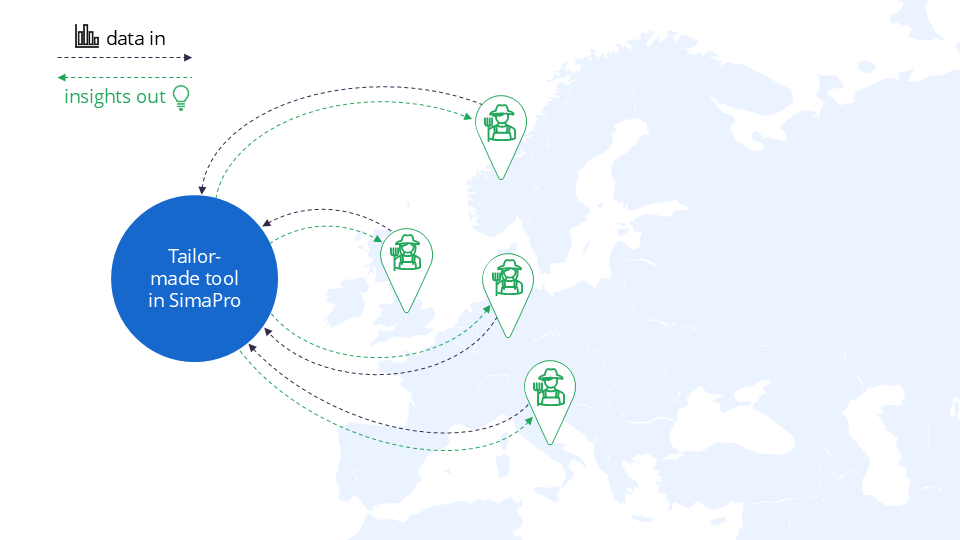
Nomad Foods, Europe’s leading frozen food company, set out to improve the accuracy of its carbon strategy. Instead of relying on industry-average emission factors, they worked with PRé to collect primary data from upstream suppliers using a tailor-made tool built on the SimaPro platform.
Thirty farmers across Europe submitted farm-level data through a simple online form, no LCA expertise required. This enabled the company to calculate crop-specific carbon footprints, identify hotspots like fuel and fertilizer use, and inform targeted reduction efforts.
The project proved that even in a complex supply chain, primary data can be collected at scale and drive both corporate strategy and real-world change.
Final thoughts: begin with curiosity, grow with confidence
You don’t need to start with technical assessments or full-scale footprinting. Begin by asking smarter questions:
- Where do our biggest impacts likely occur?
- What decisions can we make differently?
- How can we learn more?
Life cycle thinking is a practical entry point that helps build awareness and shape better decisions, laying the foundation for measurable improvement. As your sustainability efforts mature, life cycle assessment can provide the data and depth needed to validate insights and take it further.
The goal is progress, not perfection. By embedding this mindset into your business, you’ll make sustainability more strategic, informed, and actionable.
Download our free Life cycle thinking starter kit – a simple, practical tool you can use to map your product’s journey, spot data gaps, and brainstorm impactful improvements with your team.